Turkey Vest Buyers Guide 2026
You're crouched in the pre-dawn darkness, waiting for that first gobble to echo through the woods. The last thing you want is to be fumbling around for your calls, shells, or decoy stakes because your gear isn't organized properly. A good turkey vest keeps everything you need within arm's reach while staying comfortable during those long sits.
Finding the right turkey vest in 2026 means looking beyond flashy features to focus on what actually matters in the field. You need something that carries your essentials without weighing you down, stays quiet when you're moving into position, and won't fall apart after a few seasons of crawling through briars and getting soaked by morning dew.
What Makes a Great Turkey Vest
Before we dive into specific recommendations, let's talk about what separates a decent turkey vest from one that'll actually make your hunts better.
The best turkey vests balance storage capacity with mobility. You want enough pockets to organize your calls, ammo, and accessories, but not so many that you're carrying a bunch of empty space around. Look for thoughtful pocket placement that lets you access your most-used items without making a bunch of noise or awkward movements.
Comfort matters more than you might think. A vest that digs into your shoulders or shifts around when you move will drive you crazy by hour three of a hunt. The shoulder straps should be padded and adjustable, and the vest should distribute weight evenly across your back and chest.
Durability is non-negotiable. Turkey hunting is rough on gear. You'll be pushing through thick cover, sitting on wet ground, and dealing with thorns that seem designed specifically to shred fabric. A quality vest uses heavy-duty materials and reinforced stitching in high-wear areas.
Key Features to Consider
Call Pockets and Organization
Your calls are your most important tools, so they deserve the best real estate on your vest. Look for dedicated call pockets with secure closures that won't accidentally dump your box calls in the dirt. Some vests have removable call holders that make it easier to grab specific calls quickly.
Organization goes beyond just having lots of pockets. The best vests have different sized compartments for different gear types. Small pockets for friction calls, larger ones for box calls, mesh pockets for decoys, and secure compartments for shells and licenses.
Seat and Back Support
Many turkey vests include a built-in seat cushion or backrest. This isn't just about comfort – though that matters when you're sitting still for hours. A good seat keeps you off wet ground and helps you maintain proper shooting position when a bird finally shows up.
Some seats are removable, which gives you flexibility. You can leave the seat behind for mobile hunting or when you know you'll be using a tree or ground blind.
Quiet Materials and Hardware
Turkeys have incredible hearing, so your vest needs to stay quiet when you move. Look for soft fabrics that won't brush loudly against vegetation. Zippers should be smooth and quiet, and any buckles or hardware should be designed to minimize noise.
Test this if you can. Move around in the vest and listen for any squeaks, rattles, or fabric noise that might spook a bird.
Top Turkey Vest Recommendation for 2026
Alps Outdoorz Grand Slam Turkey Vest - Best Overall
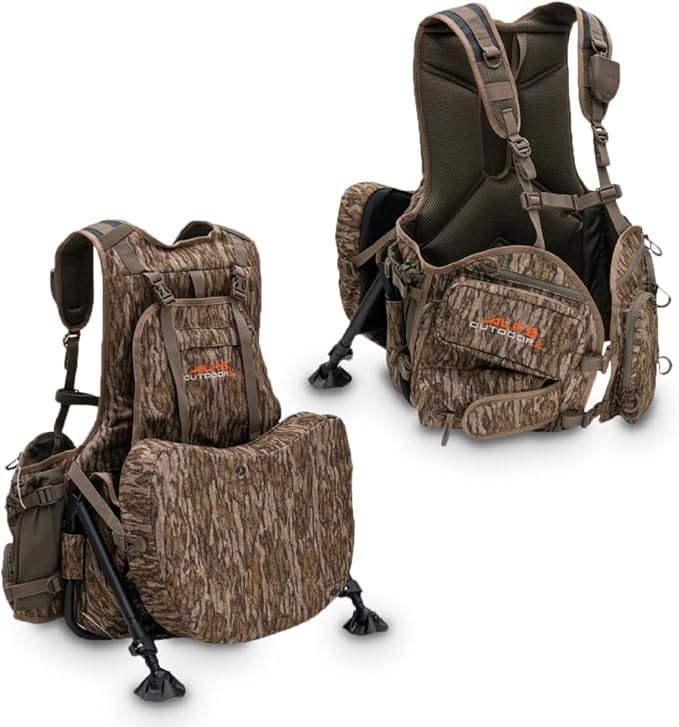
The Alps Outdoorz Grand Slam Turkey Vest hits the sweet spot between features and practicality. This vest is built for hunters who want serious organization without unnecessary bulk.
Best For: Experienced turkey hunters who carry a variety of calls and gear but want to stay mobile.
Key Specs:
- 14 pockets total including dedicated call storage
- Removable seat cushion with backrest
- Padded shoulder straps with sternum strap
- Silent magnetic closures on key pockets
- Hydration bladder compatible
- Weight: 2.8 pounds with seat
What We Like: The pocket layout makes sense. Your most-used calls go in the chest pockets where you can reach them without looking. The magnetic closures are genuinely quiet – no zippers to snag or rattle. The seat is comfortable enough for all-day sits but detaches easily when you want to go light.
The build quality is solid. After two seasons of testing, the stitching is holding up well and the fabric shows minimal wear despite plenty of abuse in thick cover.
What Could Be Better: The vest runs a bit large, so you might need to size down. The shell loops are positioned awkwardly for some shooters – fine for right-handed hunters but lefties might struggle. At nearly three pounds with the seat, it's not the lightest option if you're covering serious ground.
Choosing the Right Vest for Your Hunting Style
Your ideal turkey vest depends on how you hunt. Think about your typical hunting scenarios before making a decision.
If you're a run-and-gun hunter who covers lots of ground chasing birds, prioritize lightweight design and essential storage. You don't need every possible pocket – just the ones that hold your core gear. Look for vests that feel comfortable when you're walking and won't snag on brush.
For hunters who prefer to set up and wait, comfort features become more important. A good seat and back support will make those long sits much more pleasant. You can also handle a bit more weight since you're not hiking all day.
Beginning turkey hunters should focus on organization features. When you're still learning which calls work in different situations, having dedicated storage for everything helps you stay organized and quiet in the field.
Sizing and Fit Considerations
Getting the right fit is crucial for comfort and functionality. Most turkey vests are designed to be worn over hunting clothes, so consider what you'll typically be wearing underneath.
The vest should sit snugly without restricting your movement. You need to be able to shoulder your gun smoothly and swing to track a moving bird. Test the range of motion – can you comfortably reach all the pockets? Can you access your calls without the straps binding up?
Pay attention to torso length. Some vests work better for taller hunters, while others are cut shorter. The seat (if included) should hit at the right height when you're sitting.
Maintenance and Care Tips
A good turkey vest will last for years with proper care. After each season, give your vest a thorough cleaning to remove dirt, sweat, and any scent buildup.
Most turkey vests can be machine washed on gentle cycle, but check the care instructions. Remove any seat cushions or accessories that might not be machine washable. Use scent-free detergent if you're particular about scent control.
Check the zippers and hardware periodically. A little silicone spray on zippers will keep them running smoothly. Inspect the stitching, especially around pocket edges and stress points. Small repairs are much easier to deal with than major failures in the field.
Store your vest properly during the off-season. Hang it up rather than stuffing it in a bag, and make sure it's completely dry before storage to prevent mildew.
Budget Considerations
Turkey vests range from around $50 to over $200. Like most hunting gear, you generally get what you pay for in terms of materials, construction quality, and thoughtful design details.
That said, you don't need to spend a fortune to get a functional vest. Focus your budget on the features that matter most to your hunting style. If you rarely use a seat, don't pay extra for premium cushioning. If you only carry a few calls, elaborate organization systems aren't worth the cost.
Consider the vest an investment. A quality vest that lasts ten seasons is a better value than a cheap one that falls apart after two years. Factor in the cost of replacing gear that gets lost or damaged due to poor organization.
Frequently Asked Questions
Do I really need a turkey-specific vest, or will any hunting vest work?
While you can hunt turkeys with a general hunting vest, turkey-specific designs offer real advantages. They're optimized for the gear turkey hunters actually use – multiple calls, different types of ammunition, decoys, and other specialized equipment. The pocket sizes and placement are designed around turkey hunting scenarios, like needing quiet access to calls while remaining motionless.
How many calls should my vest be able to carry?
Most turkey hunters carry 4-6 calls regularly – typically a mix of box calls, slate calls, and diaphragm calls. Your vest should have secure storage for at least this many, plus room for a backup or two. Remember that call storage isn't just about quantity – you need to be able to access the right call quickly and quietly.
Is a built-in seat worth the extra weight?
This depends on your hunting style and physical needs. If you primarily hunt from blinds or natural rests, a built-in seat adds unnecessary weight. But for hunters who set up in open areas or on uneven ground, a good seat makes long waits much more comfortable and helps maintain proper shooting position. Look for removable seats that give you options.
What's the most important feature to look for in a turkey vest?
Organization is king. The best vest is one that lets you find what you need quickly and quietly without looking down or making unnecessary movement. Everything else – comfort, durability, extra features – builds on that foundation. A well-organized hunter is a more effective hunter.
How do I keep my vest quiet in the field?
Choose vests with soft fabrics and minimal hardware that might rattle. Secure loose items so they don't shift around when you move. Practice accessing your calls and gear so you can do it smoothly without fumbling. Some hunters add small pieces of felt or foam to quiet any potential noise points.